Parvo
Parvo in Dogs
Signs, Treatment, and Prevention Every Owner Should Know
An Educational Resource by Saviours of Strays
Canine parvovirus (CPV) is a highly contagious and relentless viral illness. It aggressively attacks the rapidly dividing cells of a dog's body, dealing devastating blows to the intestinal tract and immune system. While puppies and unvaccinated dogs face the highest risk, understanding this invisible threat is your best weapon in protecting your furry family members.
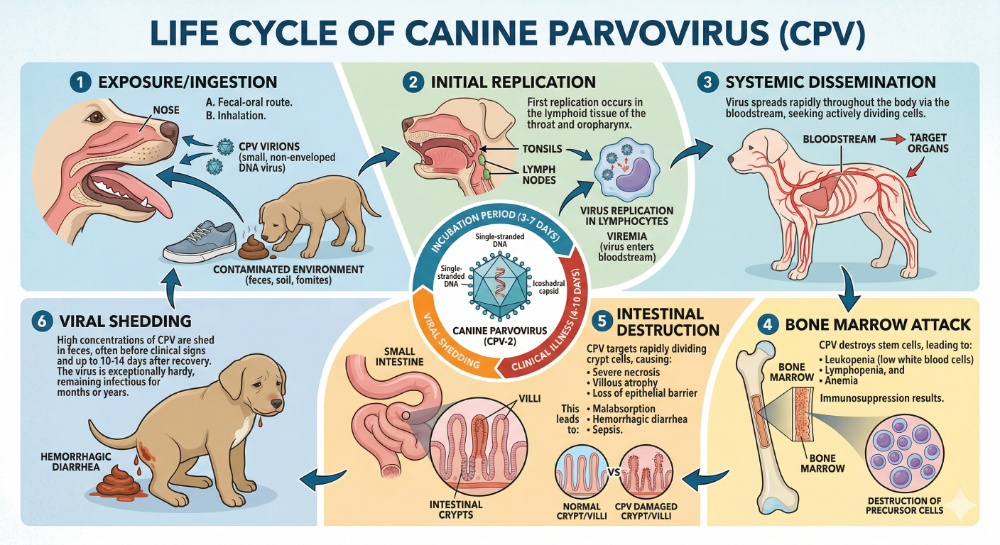
The Invisible Enemy
Parvo doesn't require direct dog-to-dog contact. It is incredibly hardy and can survive in soil, on shoes, tires, and unwashed hands for months. Your puppy can contract it just by sniffing contaminated grass or greeting you at the door if you've walked through an infected area.
High-Risk Breeds
While any unvaccinated dog can catch Parvo, certain breeds are statistically more susceptible to severe, life-threatening infections. These include Rottweilers, Doberman Pinschers, American Pit Bull Terriers, English Springer Spaniels, and German Shepherds.
⚠️ Emergency Symptoms
Parvo strikes fast and worsens rapidly. If you see these signs, seek immediate veterinary care:
- Severe, foul-smelling diarrhea (often bloody)
- Extreme lethargy and unwillingness to move
- Complete loss of appetite (anorexia)
- Persistent, uncontrollable vomiting
- Fever or severe drop in body temperature
Treatment: The Battle for Hydration
There is no antiviral drug that kills Parvo. Instead, treatment is an intensive, hospitalized battle to keep the dog's body supported while its immune system fights back. The primary cause of death in Parvo is extreme dehydration and secondary bacterial infections.
Hospitalization usually includes: Aggressive 24/7 intravenous (IV) fluid therapy, potent anti-nausea medications, broad-spectrum antibiotics, and sometimes plasma transfusions. With swift, professional intervention, survival rates can climb to 80-90%. Without it, the disease is nearly always fatal.
Myth vs. Fact
❌ Myth: Adult dogs cannot get Parvo.
Fact: While puppies are most vulnerable, any unvaccinated adult dog is at high risk of contracting the virus.
❌ Myth: Standard household cleaners kill Parvo.
Fact: Parvo survives most soaps and bleach wipes. It requires a properly diluted liquid bleach solution (1:30 ratio) left on cleanable surfaces for at least 10 minutes, or specialized veterinary disinfectants.
Prevention: Your Vaccination Checklist
Vaccination is the most effective way to prevent Parvovirus. Puppies require a series of shots to build immunity as the antibodies they received from their mother begin to fade.
6 - 8 Weeks Old
First core vaccination (DAPP/DHPP which includes Parvo). Rule: Keep the puppy entirely indoors and away from public areas.
10 - 12 Weeks Old
Second vaccination booster. Rule: You can begin socializing with known, fully vaccinated adult dogs in private, clean environments. Avoid dog parks.
14 - 16 Weeks Old
Final puppy booster. Rule: Waiting 1-2 weeks after this final shot ensures maximum immunity before full public access.
Adult Dogs
Boosters are required at 1 year of age, and generally every 1-3 years thereafter as recommended by your veterinarian.
 Saviours of Strays
Saviours of Strays promotes coexistence and compassion, working towards a harmonious community where humans and animals thrive together.
© 2026 - Saviours of Strays, All Rights Reserved. Hosted by WebLook Services.