Canine Distemper
🚨 Canine Distemper
The Silent Killer on the Streets & How YOU Can Stop It
Canine Distemper Virus (CDV) is a highly contagious and unforgiving illness. For unvaccinated street dogs and vulnerable puppies, it strikes fast and attacks the respiratory, gastrointestinal, and nervous systems.
While routine DHPPIL vaccinations are the ultimate shield, the reality of street dog care means you will inevitably encounter unvaccinated or newly relocated dogs facing this threat. But a diagnosis is not an automatic death sentence. Armed with the right knowledge, you can step in and change their fate.
⏳ The Golden Window (Crucial Insight)
The most critical factor in a dog's survival is time. Catching the virus in its early respiratory phase—before it breaches the nervous system—drastically increases the survival rate. Early detection + immediate, aggressive treatment = hope.
⚠️ How to identify canine distemper on the street
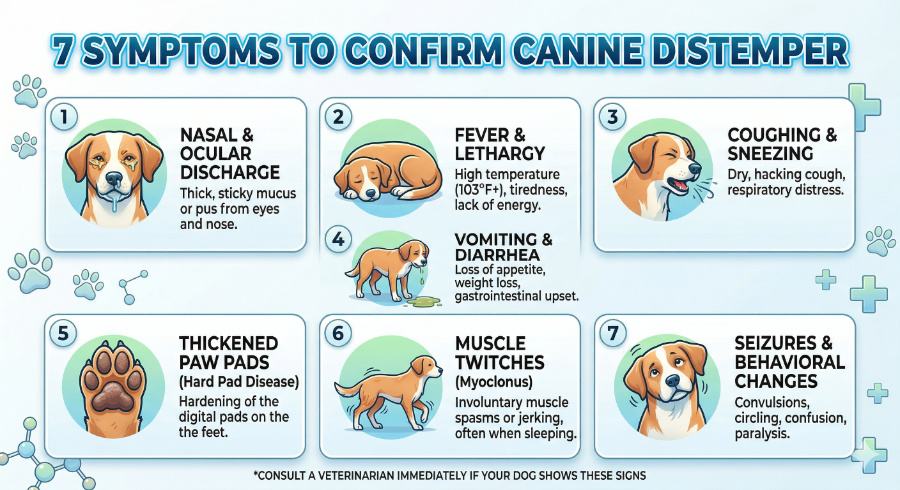
If you feed or rescue community dogs, your eyes are their first line of defense. Distemper disguises itself as a severe cold before escalating. Watch your local packs closely for these phases:
Phase 1: The Warning Signs (Respiratory & Gastrointestinal)
- Thick, yellow/green discharge crusting around the eyes and nose.
- Severe lethargy, depression, and a sudden refusal to eat.
- Fever, coughing, or sudden bouts of vomiting and diarrhea.
Phase 2: The Danger Zone (Neurological)
If the virus advances, it attacks the brain and spinal cord:
- Myoclonus: Rhythmic, uncontrollable muscle twitching (often in the face or legs).
- Head tilting, stumbling, or walking in circles.
- Seizures ("chewing gum" fits where the dog repeatedly snaps its jaw).
- Partial or full paralysis.
(Note: If a dog reaches Phase 2, they require emergency veterinary intervention, but recovery is still possible with dedicated care.)
🧪 How to confirm distemper
You’ve spotted the symptoms. Now, you need proof. Do not wait and see—act immediately.
1. The Rapid Rescue Tool: CDV Antigen Kit
- What it is: A quick swab test (usually of eye/nasal discharge).
- Why use it: It’s budget-friendly, provides answers in 10 minutes, and is the perfect first line of action right on the street or at the clinic.
2. The Gold Standard: RT-PCR Test
- What it is: A laboratory test checking for the virus's genetic material.
- Why use it: Highly accurate and definitive, often used by vets to confirm a faint rapid test or when symptoms are confusing.

💉 Treatment & Fighting Back
There is no "cure" that kills the virus, but we can give the dog’s immune system the heavy artillery it needs to win the war. DO NOT lose hope.
One of the most vital interventions available is Canglob-D (Canine Distemper Immunoglobulin).
- How it works: It provides the dog with ready-made antibodies to immediately neutralize the virus while their own body catches up.
- Standard Protocol: Generally administered at ~0.4 ml per kg of body weight, given once daily for 5–7 days.
Disclaimer: Dosage and duration must always be dictated by a licensed veterinarian based on the dog's condition.
Alongside Canglob-D, vets will use IV fluids, broad-spectrum antibiotics (to prevent secondary infections), and anti-seizure medications to stabilize the dog.
🛡️ The Ultimate Rule: Quarantine & Containment
Distemper spreads like wildfire through the air (sneezing/coughing) and via shared bowls, toys, and bedding. If you suspect a case in your community:
- Isolate: Move the infected dog away from the pack immediately.
- Sanitize: The virus can hitch a ride on your clothes and hands. Change your clothes, scrub your hands, and disinfect your shoes before interacting with any other dogs.
- Bleach is your friend: Clean all feeding bowls and resting areas with heavy-duty veterinary disinfectants or bleach solutions.
❌ Myths vs. ✅ Facts
Myth: Older dogs can't get distemper.
Fact: While puppies are most vulnerable, any unvaccinated dog of any age can contract it.
Myth: If a dog survives, they will infect others forever.
Fact: Dogs shed the virus for a few weeks to a couple of months, but they do not remain contagious forever.
Myth: Neurological twitches mean it’s time for euthanasia.
Fact: Many dogs recover from distemper and live long, happy lives with a permanent—but painless—muscle twitch.
🐶 Important Message 🐶
We are on the ground. We see the devastation of distemper, but more importantly, we witness the miracles of survival every single day. If you see a streetie struggling with crusty eyes and a loss of appetite: Don’t look away. Don't assume someone else will help. Act fast. You might be the only chance that dog has at survival.
Our online resources reach thousands, but they depend on you. Don’t forget to fund the digital initiatives that power our advocacy and education.
 Saviours of Strays
Saviours of Strays promotes coexistence and compassion, working towards a harmonious community where humans and animals thrive together.
© 2026 - Saviours of Strays, All Rights Reserved. Hosted by WebLook Services.